How to Sew Lined Curtains

how to sew lined curtains

TuffSew here, your heavy duty sewing machine manufacturer! So you want to learn how to sew lined curtains? Yeah, yeah, yeah….. we know- you aren’t looking for advice on sewing “see-through” style curtains. You landed here because you’re planning on sewing curtains with thick drapery linings.

Or, maybe you are trying to sew curtains with thick drapery linings AND an interlining!

Before we get into some tips that will help you sew curtains, linings, and interlinings – let’s talk about the applications and why it’s beneficial to install thick curtains with multiple layers.

Application #1: Blacking Out the Light

Have you ever stayed at a fancy hotel and felt the drapes? They are quite thick and do a great job keeping the light out of the room. Heck, who goes to a fancy hotel to be waken up early?

Most of the time this blackout lining is made of a synthetic material. It can be difficult for your every day household sewing machine to sew blackout lining material onto your newly chosen curtain fabric. Your normal sewing machine may skip stitches, break thread, and even break needles.

The solution is to use a heavy duty walking foot sewing machine. These machines use a larger needle, thicker thread, and a built-in walking foot mechanism to help you move the thicker fabric through the sewing process. We’ll get into the sewing machine stuff a little later..

Application #2: Keeping the Cold Out

If you want to keep your home or office warm, you’ll want to add what’s called an “interlining”  between your curtain fabric and your standard lining material. We recommend using semi-loosely woven cotton material for your interlining. This style of weave will keep out the cold air – and the cotton material creates a fluff feel to your curtains – making them feel thicker and fuller.

Make sure talk to a drapery specialist when selecting your interlining. The color of your interlining must not contrast your fabric color – otherwise it might show through and ruin the aesthetics of your curtain. Lastly, when you add an interlining….it increases the chances that your household sewing machine will falter.

Application #3: Keeping the Sound and Cold Out

For those of you who want to block out sound and cold air, you’ll need to sew-in an even thicker interlining. Some people call this type of interlining an England-Bump interlining! It’s about 2-3x thicker than standard interlinings.

We get a lot of emails from customers who struggle with these English style bump interlinings. Your household sewing machine will not hold up (most likely) when sewing three thick layers of curtain material. Our TuffSew Straight Stitch or TuffSew ZigZag is a great solution for these thick interlining applications.
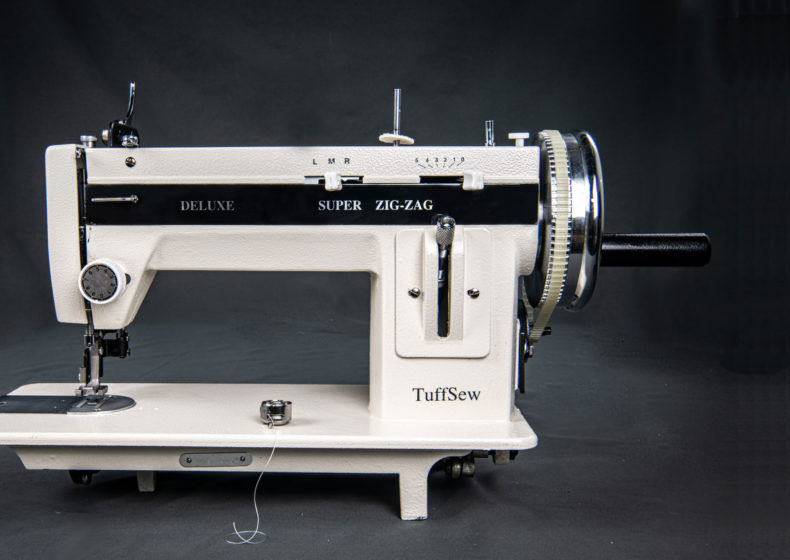
 

Here are 9 tips for how to sew lined curtains:

#1 Straight Stitching works well for curtain material. Make sure and backstitch a few times at the start and end of each length (during step #9 below) – this will assure you have a strong stitch where it counts.

#2 For heavy duty curtains (with a lining, interlining, and curtain fabric) make sure and use size 20 or 22 needle on a walking foot sewing machine. This machine uses needle type 135×17, which is much thicker than the needle on your standard sewing machine. See the video below for the needle demonstration.

#3 Give The Thread Exchange a call to learn more about which type of thread to use with your particular sewing machine. Let them know what type of material your curtains, interlining, and lining are made of. Also, let them know which sewing machine you plan on using. If you are using our TuffSew Straight Stitch, we recommend you use nylon bonded 69 thread.

#4 Always wash, dry, and iron your fabric – you don’t want any dreaded wrinkles showing up after you hang your new curtains.

#5 For heavy duty lined curtains, add two extra inches to the width of your curtain fabric. Add 7 extra inches to your length measurement. This gives you room for your doubled folded hems.

#6 Never cut the lining larger than it needs to be. Always cut it the exact length and width you want your final curtains to be.

#7 Use sewing pins when making your hems. This will keep your fabric in place. Make sure and tuck the lining(s) under the hems, using these sewing pins as needed.

#8 Use a thread color that matches your fabric.

#9 Stitch the top hem first, and then the side hems from the top to the bottom. Fold over the bottom hem, and stitch it down.

If you are thinking of using a walking foot sewing machine for your heavy duty curtains….click to learn more by watching the videos below.

Video 1 – Differences with a standard sewing machine and a walking foot machine:

Video 2: More differences from your standard sewing machine:

If you have any further questions regarding how to sew curtains… please email us at [email protected]

How to Sew Neoprene Fabric

how to sew neoprene fabric
TuffSew here, your heavy duty sewing machine manufacturer! So you want to learn how to sew neoprene fabric?  Or maybe you just want to learn a little more about the spongy material. Whatever your reason, you’ve found the right article. Neoprene is a type of synthetic rubber material which is normally sandwiched between polyester fabric. It’s incredibly difficult to sew with any sewing machine.  But we find when a Oversized Handwheel is equipped on a walking foot machine, it improves your chances of sewing neoprene. The reason why is because it slows the sewing speed down by 50% – and at a slower speed the needle doesn’t heat up as quickly. 

Neoprene Basics

It holds it’s shape very well under high and low temperatures. It’s also a flexible material, which is why many garment manufacturers are starting to use it. Some of the neoprene sewing applications we see include laptop or tablet sleeves, mouse pads, wetsuits & other garments, beverage insulators, and more. The most common question we hear at TuffSew is “Can my standard household sewing machine sew my neoprene fabric?” and/or “How many mm of fabric will my standard household sewing machine be able to sew?” All good questions. Your standard home sewing machine will be able to sew up to 2-3mm of total neoprene thickness. For example, if you are making a neoprene swimsuit that is only 2mm thick…your home sewing machine should be able to handle the job. If you are sewing neoprene materials which are more than 3mm thick, you’ll need a portable walking foot sewing machine This type of sewing machine has a motorized built in walking foot mechanism. Using a sewing machine with this type of mechanism is best because it pulls the fabric through the sewing process from the top. In conjunction, the gripped style feed dogs in a walking foot sewing machine pull the fabric from the bottom of the material. This top/bottom pull action gives you an ultimate feeding capability when you are sewing neoprene or other heavier type materials. 

How Can an Industrial Portable Sewing Machine Benefit You ?

Tuffsew here, your heavy duty sewing machine manufacturer. Is portability something that is important to you with your next sewing machine purchase? 

Do you need a machine that is more powerful (for sewing thicker/coarser materials) than a regular household sewing machine? If yes, our TuffSew Straight Stitch Industrial Portable Sewing Machine may be right for you!

Why is this sewing machine a great choice for your next heavy duty sewing project? Well, here is the TOP 5 Reasons:

5) Portability!

Our TuffSew Straight Stitch machine comes equipped with a motor that is built onto the back of the machine. Regular industrial sewing machines (ones that cannot be moved very easily) need to be used in a sewing machine table with an under mount motor. Our TuffSew industrial portable sewing machine has an advantage here if you need to take the machine on your boat, to your workshop, on the road, etc. Just make sure you can lift approximately 35 pounds 🙂

4) Built-In Walking Foot Mechanism! 

Our TuffSew Straight Stitch is designed with a built-in walking foot mechanism. This is very different that most walking foot attachments that only snap-on regular household sewing machines. This built-in walking foot mechanism will evenly feed your material as it grabs (with its traction like grip) the top of your material. This built in walking foot works in conjunction with the feed dogs which pull the bottom piece of the material through the sewing process.

3) Cleated Positraction Belts!

The TuffSew Straight Stitch has an upgraded belt system. Our belts are cleated, which eliminate slippage. The pulley that our belt sits in is geared, which eliminates slippage even further. It is very important to use this type of belt system when sewing heavy duty fabrics like leather, canvas, and vinyl. Other sewing machines use belts and pulley systems without gears or cleats. This creates slippage and doesn’t allow you to sew heavy duty fabrics. Here is a video for you to learn more about this upgraded belt system:


2) Thicker Needle Capability Designed for Heavy Fabric!

You can put up to size 23 needle into this industrial portable sewing machine. Size 23 needle looks like a thick nail – it’s super heavy duty. Regular household sewing machines only allow you to use up to needle size 19. You cannot properly penetrate heavy fabric with a size 19 standard needle. Scroll to minute 2:15 on the below video to learn more about why using thicker needles is important when sewing heavy duty fabrics.

1) Larger Thread Capability!

If you are using an improved walking foot, improved belt system, and thicker needles….doesn’t it make sense that you should be able to use heavier duty thread? The TuffSew Straight Stitch can use up to size 69 nylon bonded thread. This thread is much thicker and heavier for all your HD sewing needs.

If you have any questions about the TuffSew industrial portable sewing machine, please email us at [email protected]. We also consult on applications, so feel free to let us know about your upcoming project.
-The TuffSew Team-

How to Sew Heavy Duty Nylon Materials

Tuffsew here, your heavy duty sewing machine manufacturer. If you are landed on this article, you are probably an outdoor enthusiast looking to make or repair your own gear. I don’t have to tell you that it’s a great feeling telling your friends that you “did it yourself”.

Before creating TuffSew.com in 2003, I was in the sewing business for over 35 years teaching and educating those who wanted to learn how to use a sewing machine.

Over the years I received many questions on sewing heavy duty material including nylon.

In this article, I will go over a few tips that will help you tackle your heavy duty nylon projects.

How to Sew Nylon Materials

Selecting the Correct Sewing Machine

The first, and most important, part of sewing nylon is to select the correct sewing machine. If you are sewing multiple layers of nylon material you’ll want to use a semi-industrial or industrial sewing machine. More specifically, a walking foot portable industrial sewing machine.

When sewing multiple layers, a built in walking foot helps grab your material from the top and the bottom- efficiently pulling your material evenly through the sewing process. Click the video below to learn more:

Small Details Make a World of Difference

Make sure your sewing machine is cleaned and oiled. 

I also recommend you use a size 22 needle (one that’s new and sharp). You should be able to comfortably sew 1/4″ thick (or a tad more) with either a straight stitch or zigzag walking foot sewing machine.

Moving on to thread- very important. When you are sewing heavy duty fabric you are going to need stronger thread.

I would recommend you use nylon bonded (funny eh) #69 thread. Another reason I recommend you use a heavy duty walking foot sewing machine is because bobbin cases on a standard home sewing machines do not allow for the extra thickness of thread. You’ll just keep on getting those rats nests.

Now that you have the right tool for the job- make sure you start off slow. Practice, practice, practice. Use some old scraps of material to get warmed up for your big job.

Make sure your foot pedal works fast and slow. Nothing is worse than using a sewing machine that can’t slow down due to a 1960’s foot pedal.

TuffSew Straight Stitch Machine

Well there you have it- I hope I could help get you started with your current nylon sewing project.

Like I said, I’ve been in the sewing industry for over 35 years. If you have any further questions, please don’t hesitate to email me at [email protected].

How to Sew A Backpack with Cordura or Kodra Material

how to sew cordura backpack

TuffSew here, your heavy duty sewing machine manufacturer! So you want to learn how to sew a backpack? Maybe you just want to learn more about Cordura materials? If yes, you found the right article.

The first backpacks of our time were made of “cotton canvas” material waterproofed with wax coating. The problem with this was the material combination was very heavy. Also, the waterproofing was inadequate. 

One of the reasons backpacks were made of cotton canvas was the fact that they were very inexpensive to produce. 

This low cost to build quickly translated poor quality and low durability.

Today, if you are looking to manufacture a quality backpack…you’ll want to use Cordura or Kodra fabric. These fabrics have a rough fuzzy texture and used in all high quality backpacks. Compared to normal canvas, the Cordura is very lightweight and abrasion resistant. 

Compared to cotton canvas, polyurethane coated Cordura or Kodra is waterproof. You could use a nylon weave, but they are much heavier and not sought after as much in the backpack industry.

When looking for a superior strong, resistant to tearing and durable backpack, you should definitely consider military tactical backpacks. they can be made of both: Cordura or Kodra fabric.

Other advantages with Cordura is resistance to tearing and scruffing. Intense backpackers travel next to trees, brush, and rocks. They appreciate the durability of the waterproof travel backpack Cordura fabric and will spend extra money on a quality made backpack that will last them several years.

In terms of lifetime usage, overtime the polyurethane coating will eventually wear down. This is due to sunlight, exposure to water/salt water, chemicals used in cleaning, and storing the backpack in a damp area. 

Advise your customers to completely dry off the backpack before storing it. There are several quality levels of Cordura, so do your homework and find one that may be guaranteed of the weardown of it’s coating.

Now that you’ve selected Cordura or Kodra to be your material for your backpacks…..what sewing machine should you use to stitch it up?

Here are 5 tips for sewing cordura: 

1) Look into a built-in walking foot sewing machine. 

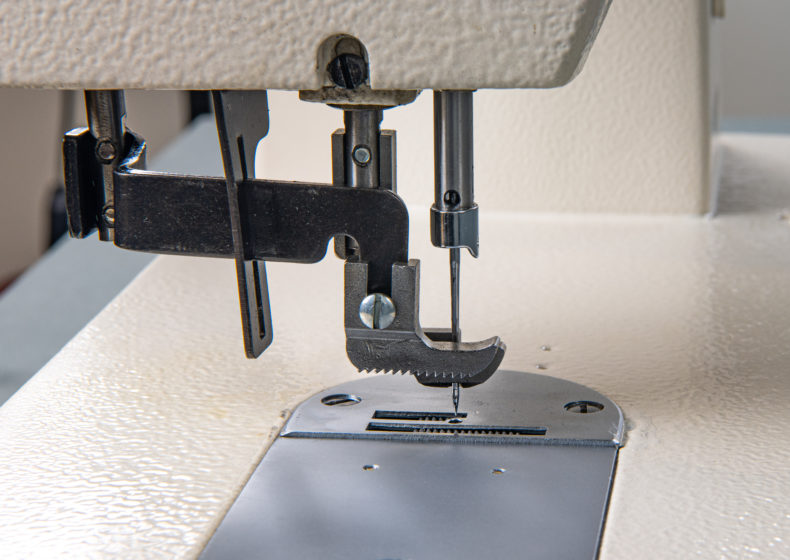
Our TuffSew Straight Stitch and TuffSew ZigZag are heavy duty, semi-industrial type sewing machines. Using a sewing machine with a built in walking foot is best because the walking foot is motorized and pulls the fabric through the sewing process from the top of the fabric. In conjunction, the gripped style feed dogs in a walking foot sewing machine pull the fabric from the bottom of the material. This top/bottom pull action gives you ultimate feeding ability when you sew Cordura or heavier type materials.  With a built-in walking foot sewing machine, you can sew many layers up to 1/4″-5/16″ thickness.  Here is a picture of this portable walking foot sewing machine and a true built in walking foot (the top portion):

For best results, do not use a standard household sewing machine when sewing layers of Cordura for backpacks. These sewing machines use a walking foot attachment.  Below is an picture of a walking foot attachment. This is what you DON’T want to use if you are sewing Cordura or Kodra fabrics. You won’t be able to sew more than 1 or 2 layers.

2) Make sure and increase your stitch length to the maximum while you are sewing.

 Some walking foot machines have a 5mm stitch length, others might have a 5.5mm or 6mm stitch length.

3) Use the largest size needle available. 

With most walking foot sewing machines, you can use up to size 21 needle.

4) Ask for a “slow” type foot pedal (some call it a carbon-elemented foot pedal). 

This will be a big advantage when sewing layers of Cordura. Take your time for best results.

5) Use a heavier type thread. 

Another great reason for using a walking foot sewing machine. Standard sewing machines can’t handle nylon bonded size 69 thread…but a true walking foot sewing machine can.

Lastly, if you want to learn why an industrial portable walking foot machine has advantages over a standard sewing machine…see this video: 

Also, here is a video on the belt pulley system advantages these walking foot machines have:

If you have any further questions regarding heavy duty sewing… email us at [email protected]

What is a Walking Foot Industrial Style Sewing Machine?

walking foot presser foot

Tuffsew here, your heavy duty sewing machine manufacturer. You landed here because you are searching for some ideas of what makes a walking foot sewing machine different than your regular household sewing machine or your full sized industrial sewing machine. 

There are so many differences, but I will generalize them here and give you some helpful links to visit for more detailed information. Today’s portable walking foot machines are categorized right in between household sewing machines and industrial sewing machines. 

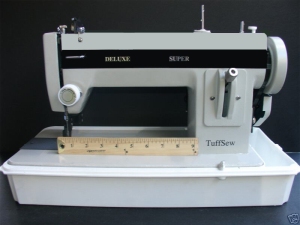
Each one of these sewing machines has distinct capabilities. Here is an image of one:


Let’s say you have a regular Singer household sewing machine, but it’s just not sewing that 1/4″ soft leather that you are placing under the presser foot. 

Well, it might be time to step up into the walking foot style sewing machine category. These types of machines power through soft leather from 1-8″ to 3/8″ thicknesses. These machines also have bottom and top presser foot, which motions in conjunction with your motor-pulling the fabric through the sewing process from the top and bottom of your material. 

This portable industrial walking foot sewing machine also has a geared belt pulley system- giving you much better penetration power. Another huge difference is the actual needle that you use in a walking foot sewing machine. 

The needle is size 135×17 and feels like a small nail. Your heavy duty materials are no match for such a needle/geared pulley system combination. Here is a video to learn more:


For more information on what makes a “walking foot” sewing machine different than a household and full sized industrial sewing machine, click Walking Foot Industrial Sewing Machine.


Now let’s get to some applications. So when a person actually buys a walking foot sewing machine, what are they actually using it for? Well, they could be using this style sewing machine for many different materials. Many customers that purchase this style sewing machine use it for vinyl. 

For more information about how to use a walking foot sewing machine for vinyl purposes, click here: How to Sew Thick Vinyl.

What if you are sewing leather? There are so many sewing folks out there who are trying to put layers of coarse leather under the presser foot of their standard household sewing machine. 

Remember, a lot of those machines have plastic gears and parts. You WILL crack those gears and parts eventually, costing you tons of repair costs. If you want to learn how to sew leather with a walking foot style sewing machine, click here: Walking Foot Sewing Machine for Leather

What you are sewing canvas, including marine canvas? Walking foot sewing machines are great for this type of material. You definitely don’t want to use a household sewing machine…you might not be able to penetrate the material enough. 

Also, full sized industrial sewing machines might run a bit too fast. So, if you want to learn about sewing marine canvas with a walking foot sewing machine, click here: Walking Foot Sewing Machine for Canvas.


Here is another video which talks about a few more advantages these walking foot machines have over standard household machines:


Feel free to email us any questions at [email protected].
The TuffSew Team

The Top 5 Reasons Purchase a Portable Industrial Sewing Machine

Tuffsew here, your heavy duty sewing machine manufacturer. Are you looking for an upgrade to your household or heavy duty sewing machine? In this article you will learn the top 5 reasons why you should consider purchasing a portable industrial sewing machine. And here are the reasons:

Power and Strength

You get the power of an industrial sewing machine and the versatility of a household sewing machine. You won’t need a table and a mounted motor. This portable walking foot industrial sewing machine will sit on any flat surface and the motor is attached to the backside of the machine. This TuffSew Straight Stitch machine features a geared belt pulley drive giving you more penetration power! No more slipping! Here is a video which speaks to this upgraded belt pulley system: 

Built in Walking Foot Capability! 
The built-in walking foot on a portable industrial sewing machine makes this machine superior to any household or industrial strength sewing machine. This walking foot grabs the material from top and bottom, which relieves pressure on the needle assembly. 

You are going to get twice the feed because you have twice the grab. This walking foot assembly is motorized, so it will always go with the flow of your sewing speed! Do not be fooled into purchasing a household or industrial strength sewing machine with a walking foot attachment. 

These are two totally different sewing machines. Here is a video which speaks to the advantages of a walking foot sewing machine: 


Portability!

There are thousands of customers a year that purchase this type of sewing machine. One of the main reasons is because it’s “portable”.  You can take this machine on and off your boat. You can take it on a camping trip, on summer sports trips, and many more places. Just grab the machine on the underside and move it. It is about 35 pounds, so expect a little bit of a workout.

Durability! 

This type sewing machine is made with all metal parts and cast iron construction. You won’t have to worry about plastic gears breaking or cracking over time. Just keep your machine oiled up every couple months, and it will last you many, many years! You can feel comfortable sewing twice the material without damaging the gears with a portable industrial sewing machine.

Needle Size Capability! 

The needle on this sewing machine looks like a small nail. It’s 135×17 design type will penetrate even the thickest fabrics. With sizes ranging from 18 to 23, you’ll be certain to have a thickness that will tackle your project.

For more information, click to learn more about this Portable Industrial Sewing Machine.

The TuffSew Team

How To Sew Thick Vinyl by TuffSew

how to sew vinyl

It’s TuffSew again, your heavy duty sewing machine manufacturer! Sure, your standard household machine can sew vinyl. 

But what happens when you want to sew more than 2 layers? Why is your sewing machine not able to handle the extra layers? 

Remember, every sewing machine has it’s limitations. 

Here’s an analogy: Would you drive your Honda Civic to a ski resort when you knew you had to go through a snowstorm? You could…but wouldn’t be more efficient and safer to rent a car with 4WD?

Here are a few tips for sewing thick vinyl

Consider purchasing a walking foot sewing machine. 

Not a sewing machine with a “walking foot attachment.” There is a huge difference between the two.

Here is a picture of a walking foot sewing machine and a true built in walking foot (the top portion): 

Make sure and increase your stitch length to the maximum while you are sewing vinyl. 

Some walking foot machines have a 5mm stitch length, others might have a 5.5mm or 6mm stitch length.

Use the largest size needle available. 

This is another reason why using a walking foot sewing machine is SO important. With standard sewing machines, the needles are thin and don’t penetrate as well. All portable walking foot machines use a much thicker needle- it’s almost nail-size! We recommend using at least size 21 needle.

If you are having a problem sliding the material while you are sewing…

Place a piece of tissue paper under the fabric.

Use a heavier type thread. 

Another great reason for using a walking foot sewing machine. Standard sewing machines cannot handle nylon bonded size 69 thread…but a true walking foot sewing machine definitely will handle that weight.

To learn more about how a walking foot sewing machine can help when sewing thick materials, see the videos below: 

If you have any further questions regarding sewing heavy vinyl material, email us at [email protected].

The TuffSew Team


How to Sew Marine Canvas

how to sew marine canvas

TuffSew here, your heavy duty sewing machine supplier. Here at TuffSew we get many questions about “How do I sew Marine Canvas?” First of all, what is marine canvas?

It’s really a phrase that encompasses dozens of materials such as acrylics, polyesters, and many coated meshes used in the outdoors. 

These materials are usually resistant to water and also resistant to harmful UV rays. You’ll see marine canvas applications used in awnings, tarps, boating materials, tenting materials and many more. Now let’s go over some tips and important things to remember when sewing marine canvas.

The Tools You’ll Need to Have

A Walking Foot Sewing Machine

First off is a heavy duty walking foot sewing machine. We recommend our Tuffsew Straight Stitch or TuffSew ZigZag sewing machine.

One of the sticking points to sewing marine canvas materials is your stitch length. 

Make sure you use a long stitch length, somewhere in the neighborhood of 5-6mm. We’ve redesigned our walking foot sewing machines to have a longer stitch length than any other walking foot sewing machine in the market today. This helps our customers sew through the heaviest fabrics.

The Right Thread and Needles

For needles, you are going to need size 18, 20, and 22 needle, type 135×17.

You’ll also need polyester thread sizes ranging from #69, #92, or #138.

Thread color? Well that depends on your level of sewing ability. If you choose a thread color that highly contrasts your material, and you are a sewing beginner, then expect to see your errors. We’ve seen some beautiful projects with highly contrasted thread/material, but make sure you can handle the added pressure of nailing those seams.

The Right Foot Pedal

Make sure you are using a foot-pedal that has speeds that are slow. You want to make sure you are in control of your project at all times. You also want to check your tension. If your material is puckering, than you have set the tension dial too high. 

If you are seeing loops in the seam, then you aren’t using enough tension. Make sure and use a test piece of material before you sew your actual project.

As long as you are using the correct type of sewing machine, needle, and thread to handle your thick marine canvas materials you can sew like you would on a normal household sewing machine. The key is, use a walking foot sewing machine….and with our longer stitch length we feel like the TuffSew Straight Stitch or ZigZag sewing machines are your best choices.

How to Sew Leather with a Heavy Duty Industrial Sewing Machine

how to sew leather

TuffSew here, your heavy duty sewing machine supplier. So, you have decided to start sewing leather. Here at TuffSew, we get one or two questions a day regarding sewing leather. 

The most important question to ask yourself is “what sewing machine am I going to use?” Let’s say you have a regular household sewing machine that you plan on using for this leather project. Will it sew your new leather project? The answer is maybe. There are many variables you need to be aware of.

First, your household sewing machine takes a maximum needle size of 19. Will this handle some leather? Yes, it will. But that size needle is pretty thin….and will only work on SOFT leather products with thicknesses from 1/16″ to 1/8″.

One of the biggest problems people have when using a household sewing machine for leather is they think they can sew 1/4″ thick or greater. If you do this, chances are you will break needles, skip stitches, and stall out. If you truly want to learn how to sew thick leather up to 1/4″ thick, make sure to research machines such as our Straight Stitch Industrial Portable Sewing Machine for leather.
 
TuffSew Straight Stitch Walking Foot Sewing Machine
 
The Straight Stitch can take up a size 23 needle! This size needle looks and feels like a nail…and will penetrate your leather projects very efficiently. This machine is manufactured with a built in walking foot. 

This walking foot will grab your leather material from the top and the bottom…evenly feeding your thick material through the sewing process. Here is an image of the walking foot:
Built In Walking Foot
 

And here are the 7 additional tips when sewing leather:

1) Don’t buy the most expensive leather the first or second time you sew leather. 

A lot of times you can find scrap leather from a local dealer at very high discounts. Remember, practice makes perfect. Learn how different thicknesses of leather need different needle types, sewing speeds, and varied lengths of stitches.


2) Find a knowledgable leather supplier, someone you can trust. 

Give them detailed instructions on what your application or project is, and ask them what they recommend you use.

3) Use a rotary cutter to cut your leather skins. 

You should also be using some weights to keep your material in place while you cut.


4) Sewing Leather takes time, slow down. 

If you don’t have enough time for your project, then don’t start it. Manage your time and start back up when you can give 100% of your attention and effort to your leather sewing project.

5) You can press leather with an iron (other side of hide).

6) Don’t use pins on leather as they leave holes. 

Ask your leather provider about clips.

7) If you are sewing 1/8″ thick or greater, make sure and use a presser foot that is grooved. 

The TuffSew Straight Stitch Machine has this grooved presser foot. The feed dogs are also grooved. This will give you the benefit of true grip when you are sewing. You want to be in complete control when sewing thick leather- so make sure and get the right machine for the job. For more information regarding this machine, please visit: Walking Foot Sewing Machine for Leather.


Lastly, here is a YouTube video on some advantages of using a walking foot machine for sewing leather or other thick materials:


Click for more information about our: TuffSew Portable Walking Foot Sewing Machine.
 
The TuffSew Team

What Tools Do I Need to Sew Canvas for Boating Projects

how to sew canvas

Before you start diving into do-it-yourself canvas sewing work on your boat- you need to make sure you have all the right tools for the job. You are going to need a heavy duty sewing machine, some thick needles, some thread, a good pair of scissors, and material. 

You don’t need to be alarmed and go buy a $1,200 dollar sewing machine. A simple walking foot sewing machine with a built in motor will do.

We recommend our TuffSew Straight Stitch 9” heavy duty walking foot sewing machine for all of your sewing projects. There are two different size TuffSew Straight Stitch machines. One has a 7” gate the other has a 9” gate. The gate is essentially the amount of horizontal working space from the left edge of the sewing machine to middle base of the machine. 

We strongly encourage you to use a machine with a longer 9” base-it will certainly make things easier on your when sewing canvas. To learn more about this sewing machine, please click on the video below:
 
http://www.youtube.com/watch?v=HN-ewDgw8V4
 
Let’s get to material. You have primarily 2 choices at this point. You can go with the standard in the industry “Sunbrella” which is acrylic – or natural canvas. We do recommend using Sunbrella however the price is 2-3 times higher than natural canvas.

Next on to the recommended thread! If you are new to sewing it’s important to use the same color thread as your material. You certainly don’t want to show off your errors. Light colored thread on top of dark material does look fancy- if you are up for the challenge. 

The type of thread you want to use is polyester based 69 or 92 weight. A simple google search will place in on websites where you can order all different colored threads for your particular project.

Needles and the correct sewing machine are next and the most important topic on this article. The following hypothetical situation happens daily… So you are excited….let’s say you bought your Sunbrella material, bought a great pair of new scissors, and bought your brand new 69 colored thread. 

You wake up early one Saturday and take out your regular household sewing machine and needles. You start to sew…but the needle not only won’t penetrate ¼” thickness of material, and the needle starts bending and then they keeps breaking. DON’T PANIC! It’s not you.

You just need to realize you are not using the correct sewing machine and needle. You need to use a 135×17 needle size 22. These needles are like nails and will penetrate up to 3/8” thickness of canvas. 

You also need a walking foot industrial style sewing machine to hook these needles into. Once you have the right sewing machine and needles….your sewing project will come alive.

It’s important to find a heavy duty walking foot sewing machine for sewing canvas. Click to learn the other benefits to using the TuffSew Walking Foot Portable Industrial Sewing Machine.

As always, if you have any further questions- please don’t hesitate to email me at [email protected]. I get back to all emails within 24 hours.
-The TuffSew Team-

How to use a Heavy Duty Walking Foot Sewing Machine for Upholstery Fabric

how to sew upholstery

The myth is over. Sewing upholstery is no different than sewing regular fabrics. The only difference is with the equipment and consumables you will use to tackle your thick upholstery projects. 

Thicker upholstery fabrics require you to use heavy duty walking foot sewing machines equipped with thicker thread such as 69 nylon bonded thread.

Why? Heavier material needs to be held together by heavier thread and stronger stitches. You will also need industrial grade sewing needles when working with upholstery. Normal needles will bend or break when trying to penetrate upholstery. Make sure and use sharp scissors to cut through your thick material.

Also when sewing upholstery you will also need to include backing, which requires you to use a portable walking foot sewing machine to handle this weight. You can’t use a heavy duty thread and an industrial grade needle on a regular household sewing machine. 

Make sure and use the correct machine for your sewing needs-otherwise your project will look inconsistent. 

Now on to how to sew upholstery:

Inspection  

First examine your material. 

Take your sharp pair of 6-7 inch scissors and trim all the worn out or frayed edges of your material. Make sure and cut just enough. There is no reason to cut excess material that is in good shape.

Sewing Machine Setup: 

Medium Stitch Length. Mid-Range Tension.

Pattern Pile or Nap: 

You want to determine if your material pieces have a nap. Don’t know what a nap is? Imagine brushing your dog’s hair down, when it’s neat and shiny. And then imagine brushing it the other way and you’ll feel and see the resistance. Make sure all your upholstery pieces are facing the same way-nice and shiny. This will affect your end esthetic result.

Double Check Equipment: 

Make sure you are using a portable walking foot machine. Make sure and use a size 18,20, or 22 needle depending on thickness of fabric and sewing machine recommendation. Make sure you are using nylon bonded 69 thread.

Upholstery Placement: 

Most built-in walking foot sewing machines have a 3/8” lift which allows you to put more material under the presser foot. You always want to leave a little seam allowance. Make sure and place the raw edges right on top of eachother while the right sides together.

Sewing: 

Start sewing normally as you would with a regular household sewing machine. If you have some loosely woven fabric that might unravel, finish the raw edges with a serger. If your project doesn’t have backing, you’ll need an extra seem so it doesn’t unravel.

For more information on portable walking foot machines which are built to sew heavy duty upholstery fabrics, click here: http://www.tuffsew.com/straight-stitch-industrial-walking-foot-sewing-machine

Using a Heavy Duty Walking Foot Sewing Machine for Thick Fabrics

sewing walking foot machine

TuffSew here, your heavy duty sewing machine supplier. Whether you are a sailor, upholster, or leather shop owner- it’s important that you understand the importance of using the right sewing machine for your heavy duty projects. 

One example is a sailor and his or her understanding that most new boats are going to need a ton of canvas or brightwork done over the years.

It’s important for you to use a quality walking foot sewing machine that is easy to use, reasonably priced, durable, rugged, dependable, and has years of success. Here are the most important benefits to a walking foot sewing machine when sewing heavy duty fabrics such as leather, canvas, sailcloth, upholstery materials, strapping and more:

Sewing Thick Fabrics with a Walking Foot Sewing Machine

The Walking Foot

When you use a heavy duty industrial walking foot sewing machine- it comes with a built-in walking foot mechanism. This is very different that most walking foot attachments that only snap-on regular household sewing machines. 

This built-in walking foot will evenly feed your material as it grabs (with its traction like grip) the top of your material. This built in walking foot works in conjunction with the feed dogs which pull the bottom piece of the material through the sewing process.

straight stitch sewing leather

Higher Foot Lift

Most built-in walking foot sewing machines have a 3/8” lift which allows you to put more material under the presser foot. You can comfortably sew most heavy duty materials under the presser foot because of the walking foot assembly.

Built in walking foot sewing machine

Portability 

This is a huge concept for boating enthusiasts or anyone who needs to transfer their sewing machine from place to place. Most walking foot machines are roughly 35-40 pounds, depending on the size (7” or 9” gate) of the machine. Feel free to take your walking foot sewing machine anywhere as it’s easy to grip underneath the head of the machine. There are many cases available for this type of sewing machine as well.

Cast Iron Body and Metal Parts

All walking foot sewing machines come with a cast iron finish and all metal working parts. Metal gears and parts will last much longer than any sewing machine with plastic gears and parts. Plastic gears and parts crack and break down quickly. Having a cast iron body proves to be much more durable than plastic bodies. If the machine drops, it will not shatter into 100 pieces. Durability is much higher with a walking foot sewing machine.

Electronic Foot Control

All walking foot sewing machines come with an electronic foot controller. You can control your speed better with this type of foot controller. You want to use a long foot controller cord, if possible. Most walking foot sewing machines come with a longer cord.

Warranty

You want to make sure you are buying your walking foot sewing machine from a trusted source. You want to buy from a company who has been in business for several years. Usually a warranty or a store credit is what you should be looking for. You want to find a machine with a 1 year parts warranty in case you drop your machine. You want to look for a supplier with a 3 month labor warranty.
For more information click to learn more about this walking foot sewing machine.