How to Sew Lined Curtains

how to sew lined curtains

TuffSew here, your heavy duty sewing machine manufacturer! So you want to learn how to sew lined curtains? Yeah, yeah, yeah….. we know- you aren’t looking for advice on sewing “see-through” style curtains. You landed here because you’re planning on sewing curtains with thick drapery linings.

Or, maybe you are trying to sew curtains with thick drapery linings AND an interlining!

Before we get into some tips that will help you sew curtains, linings, and interlinings – let’s talk about the applications and why it’s beneficial to install thick curtains with multiple layers.

Application #1: Blacking Out the Light

Have you ever stayed at a fancy hotel and felt the drapes? They are quite thick and do a great job keeping the light out of the room. Heck, who goes to a fancy hotel to be waken up early?

Most of the time this blackout lining is made of a synthetic material. It can be difficult for your every day household sewing machine to sew blackout lining material onto your newly chosen curtain fabric. Your normal sewing machine may skip stitches, break thread, and even break needles.

The solution is to use a heavy duty walking foot sewing machine. These machines use a larger needle, thicker thread, and a built-in walking foot mechanism to help you move the thicker fabric through the sewing process. We’ll get into the sewing machine stuff a little later..

Application #2: Keeping the Cold Out

If you want to keep your home or office warm, you’ll want to add what’s called an “interlining”  between your curtain fabric and your standard lining material. We recommend using semi-loosely woven cotton material for your interlining. This style of weave will keep out the cold air – and the cotton material creates a fluff feel to your curtains – making them feel thicker and fuller.

Make sure talk to a drapery specialist when selecting your interlining. The color of your interlining must not contrast your fabric color – otherwise it might show through and ruin the aesthetics of your curtain. Lastly, when you add an interlining….it increases the chances that your household sewing machine will falter.

Application #3: Keeping the Sound and Cold Out

For those of you who want to block out sound and cold air, you’ll need to sew-in an even thicker interlining. Some people call this type of interlining an England-Bump interlining! It’s about 2-3x thicker than standard interlinings.

We get a lot of emails from customers who struggle with these English style bump interlinings. Your household sewing machine will not hold up (most likely) when sewing three thick layers of curtain material. Our TuffSew Straight Stitch or TuffSew ZigZag is a great solution for these thick interlining applications.
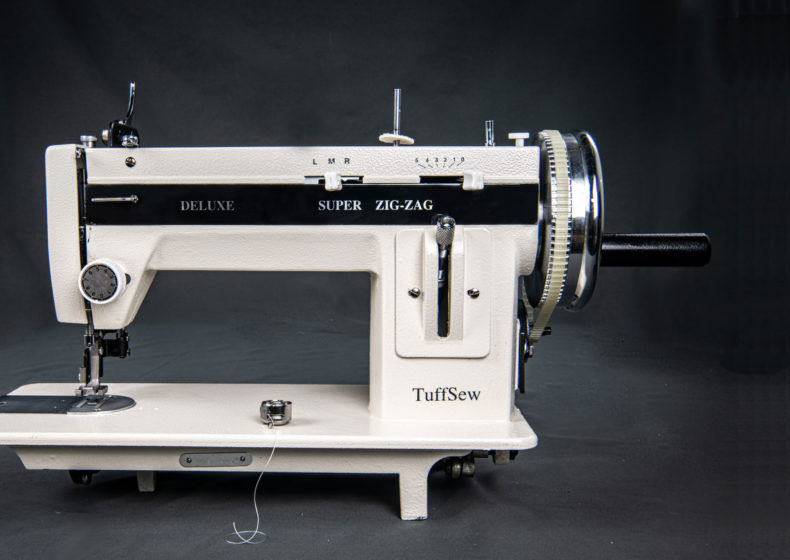
 

Here are 9 tips for how to sew lined curtains:

#1 Straight Stitching works well for curtain material. Make sure and backstitch a few times at the start and end of each length (during step #9 below) – this will assure you have a strong stitch where it counts.

#2 For heavy duty curtains (with a lining, interlining, and curtain fabric) make sure and use size 20 or 22 needle on a walking foot sewing machine. This machine uses needle type 135×17, which is much thicker than the needle on your standard sewing machine. See the video below for the needle demonstration.

#3 Give The Thread Exchange a call to learn more about which type of thread to use with your particular sewing machine. Let them know what type of material your curtains, interlining, and lining are made of. Also, let them know which sewing machine you plan on using. If you are using our TuffSew Straight Stitch, we recommend you use nylon bonded 69 thread.

#4 Always wash, dry, and iron your fabric – you don’t want any dreaded wrinkles showing up after you hang your new curtains.

#5 For heavy duty lined curtains, add two extra inches to the width of your curtain fabric. Add 7 extra inches to your length measurement. This gives you room for your doubled folded hems.

#6 Never cut the lining larger than it needs to be. Always cut it the exact length and width you want your final curtains to be.

#7 Use sewing pins when making your hems. This will keep your fabric in place. Make sure and tuck the lining(s) under the hems, using these sewing pins as needed.

#8 Use a thread color that matches your fabric.

#9 Stitch the top hem first, and then the side hems from the top to the bottom. Fold over the bottom hem, and stitch it down.

If you are thinking of using a walking foot sewing machine for your heavy duty curtains….click to learn more by watching the videos below.

Video 1 – Differences with a standard sewing machine and a walking foot machine:

Video 2: More differences from your standard sewing machine:

If you have any further questions regarding how to sew curtains… please email us at [email protected]

How to Sew Neoprene Fabric

how to sew neoprene fabric
TuffSew here, your heavy duty sewing machine manufacturer! So you want to learn how to sew neoprene fabric?  Or maybe you just want to learn a little more about the spongy material. Whatever your reason, you’ve found the right article. Neoprene is a type of synthetic rubber material which is normally sandwiched between polyester fabric. It’s incredibly difficult to sew with any sewing machine.  But we find when a Oversized Handwheel is equipped on a walking foot machine, it improves your chances of sewing neoprene. The reason why is because it slows the sewing speed down by 50% – and at a slower speed the needle doesn’t heat up as quickly. 

Neoprene Basics

It holds it’s shape very well under high and low temperatures. It’s also a flexible material, which is why many garment manufacturers are starting to use it. Some of the neoprene sewing applications we see include laptop or tablet sleeves, mouse pads, wetsuits & other garments, beverage insulators, and more. The most common question we hear at TuffSew is “Can my standard household sewing machine sew my neoprene fabric?” and/or “How many mm of fabric will my standard household sewing machine be able to sew?” All good questions. Your standard home sewing machine will be able to sew up to 2-3mm of total neoprene thickness. For example, if you are making a neoprene swimsuit that is only 2mm thick…your home sewing machine should be able to handle the job. If you are sewing neoprene materials which are more than 3mm thick, you’ll need a portable walking foot sewing machine This type of sewing machine has a motorized built in walking foot mechanism. Using a sewing machine with this type of mechanism is best because it pulls the fabric through the sewing process from the top. In conjunction, the gripped style feed dogs in a walking foot sewing machine pull the fabric from the bottom of the material. This top/bottom pull action gives you an ultimate feeding capability when you are sewing neoprene or other heavier type materials. 

How to Sew Leather with a Heavy Duty Industrial Sewing Machine

how to sew leather

TuffSew here, your heavy duty sewing machine supplier. So, you have decided to start sewing leather. Here at TuffSew, we get one or two questions a day regarding sewing leather. 

The most important question to ask yourself is “what sewing machine am I going to use?” Let’s say you have a regular household sewing machine that you plan on using for this leather project. Will it sew your new leather project? The answer is maybe. There are many variables you need to be aware of.

First, your household sewing machine takes a maximum needle size of 19. Will this handle some leather? Yes, it will. But that size needle is pretty thin….and will only work on SOFT leather products with thicknesses from 1/16″ to 1/8″.

One of the biggest problems people have when using a household sewing machine for leather is they think they can sew 1/4″ thick or greater. If you do this, chances are you will break needles, skip stitches, and stall out. If you truly want to learn how to sew thick leather up to 1/4″ thick, make sure to research machines such as our Straight Stitch Industrial Portable Sewing Machine for leather.
 
TuffSew Straight Stitch Walking Foot Sewing Machine
 
The Straight Stitch can take up a size 23 needle! This size needle looks and feels like a nail…and will penetrate your leather projects very efficiently. This machine is manufactured with a built in walking foot. 

This walking foot will grab your leather material from the top and the bottom…evenly feeding your thick material through the sewing process. Here is an image of the walking foot:
Built In Walking Foot
 

And here are the 7 additional tips when sewing leather:

1) Don’t buy the most expensive leather the first or second time you sew leather. 

A lot of times you can find scrap leather from a local dealer at very high discounts. Remember, practice makes perfect. Learn how different thicknesses of leather need different needle types, sewing speeds, and varied lengths of stitches.


2) Find a knowledgable leather supplier, someone you can trust. 

Give them detailed instructions on what your application or project is, and ask them what they recommend you use.

3) Use a rotary cutter to cut your leather skins. 

You should also be using some weights to keep your material in place while you cut.


4) Sewing Leather takes time, slow down. 

If you don’t have enough time for your project, then don’t start it. Manage your time and start back up when you can give 100% of your attention and effort to your leather sewing project.

5) You can press leather with an iron (other side of hide).

6) Don’t use pins on leather as they leave holes. 

Ask your leather provider about clips.

7) If you are sewing 1/8″ thick or greater, make sure and use a presser foot that is grooved. 

The TuffSew Straight Stitch Machine has this grooved presser foot. The feed dogs are also grooved. This will give you the benefit of true grip when you are sewing. You want to be in complete control when sewing thick leather- so make sure and get the right machine for the job. For more information regarding this machine, please visit: Walking Foot Sewing Machine for Leather.


Lastly, here is a YouTube video on some advantages of using a walking foot machine for sewing leather or other thick materials:


Click for more information about our: TuffSew Portable Walking Foot Sewing Machine.
 
The TuffSew Team

How to Sew Thick Material and Multiple Layers by TuffSew

how to sew thick material

TuffSew here, your heavy duty sewing machine supplier. Whether you sew because it’s your hobby or your livelihood, it’s important to continue to learn different concepts and techniques along the way. 

Sewing begins to be a challenge when you decide to start tackling multiple layers of material underneath your presser foot. After reading this article, you should be better suited to handle situations when you must sew thick materials.

First you need to ask yourself “What type of sewing machine am I working with?” This is extremely important because every sewing machine has its limitations. If you are using a regular household sewing machine, the following 3 tips will help you:

1)      Do you need all that additional layer lining? Probably not. Cut off the excess (especially for side seams) but make sure not to break the actual stitching.

2)      Use the largest size needle acceptable for your sewing machine. Usually a size 18 or 19 needle will allow you to penetrate the multiple layers more effectively.

3)      In situations when you are breaking needles –maybe you are sewing a strap for a purse- use the hand wheel alone.

Those tips didn’t help? Still breaking needles? The problem is not you or your domestic sewing machine-it’s the capabilities of the machine. It’s time for you to start looking into more of an industrial grade sewing machine. 

Portable walking foot industrial strength sewing machines will stand a much better chance of completing your thick sewing projects. 

We recommend our TuffSew Straight Stitch machine, you can view it here http://www.tuffsew.com/straight-stitch-industrial-walking-foot-sewing-machine. Here is a video with more information on this type of sewing machine:

To go over the details of the above video. Walking foot industrial strength sewing machines will help you sew thicker fabrics because:

1)      You can use larger needles- up to 22 or 23
2)      There are “grips” on the walking foot and feed dogs, which help pull the heavy fabric through the sewing process
3)      You can use nylon thread and thicker weighted thread in general- giving the stitching in your final project much better strength and life duration
4)      More power- more RPM’s and torque equals better results when sewing heavy fabric
5)      More durability- all metal parts and cast iron construction will give you a machine that lasts much longer than plastic parts and construction
If you are interested in understanding more about sewing thicker materials, feel free to stop by our website at www.tuffsew.com.

Seven Important Tips when Sewing Leather by TuffSew

sewing thick leather

TuffSew here, your heavy duty sewing machine supplier. Sewing with leather can be very difficult and unforgiving if you make any mistakes. 

Many people ask us for sewing tips when working with leather products. Here are seven basic suggestions which will help you when sewing a type of material unlike any other. 

7 Tips When Sewing Leather

Make sure and examine your leather before you actually mark out your pattern. 

Sometimes there may be a small hole or slight imperfection in the hide. You certainly do not want to get to the end of your project and then see a small tear in your new leather purse. Imperfections are normal because the hide was once on animals who lived in the wild where scarring is a normal occurrence.

You can’t really pin leather-use pattern-weights. 

These weights will keep your material locked in place like a pin would. We recommend cutting leather with a sharp pair of heavy duty scissors or a sharp rotary cutter. That’s the safest way.

Use the correct sewing machine for your needs. 

A normal domestic sewing machine will sew lightweight garment leather. Usually you can sew up to 1/8” thickness on this domestic machine. Using a walking foot attachment or Teflon presser foot will help.

If you’re sewing leather products over 1/8” thickness, you are going to need a portable walking foot sewing machine that can actually handle what you are trying to accomplish. 

Your best bet is a walking foot industrial sewing machine. We recommend our TuffSew Straight Stitch machine.

5)      You need to use a size 20 or 22 needle to penetrate thick and coarse leather. 

A domestic sewing machine can only take up to a 19 needle. These special leather needles will be the difference in an “A+” result versus a “C” result.

6)      Make sure and use nylon weighted thread, not cotton. 

It’s stronger and will last much longer.

7)      Skipping stitches is always an issue when sewing leather. 

Why? Well, first off, are you using the correct sewing machine? Look at tip number 4 above. You might be encountering uneven bulk under the presser foot or seems coming together. Make sure you are using a brand new sharp size 22 needle with your built in walking foot sewing machine. 

The sharpness of the needle will penetrate properly, and the built-in motorized walking foot will help feed the fabric properly.

Remember, if you are sewing thick leather, look into a walking foot sewing machine. Here is another article you can reference if you need information on a sewing machine for leather.
If you are interested in understanding more about sewing with leather, feel free to stop by our website at www.tuffsew.com